
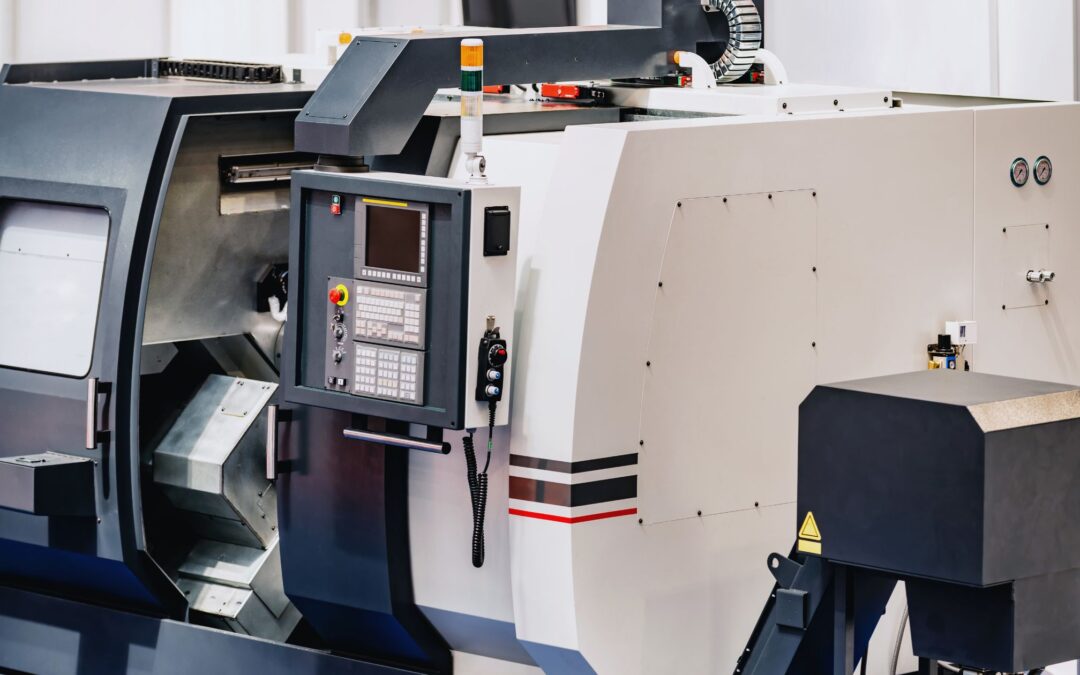
The world of manufacturing is changing faster than anyone expected—and one advanced CNC technique is leading the transformation. Engineers, machinists, and production leaders everywhere are abandoning old fabrication methods because this cutting-edge CNC approach delivers precision, speed, control, and efficiency that traditional processes simply cannot compete with.
The technique?
High-Efficiency Multi-Axis Adaptive CNC Machining—a breakthrough method that combines 5-axis machining, AI-driven optimization, and real-time adaptive tool control.
It’s not just an improvement.
It’s a complete reinvention of how complex parts are built.
Let’s explore why this advanced CNC technique is leaving traditional fabrication in the dust.
What Makes This CNC Technique So Revolutionary?
Traditional fabrication methods—manual machining, simple 3-axis milling, hand welding, plasma cutting, and manual forming—come with limitations:
-
Limited angles
-
Slower production
-
Higher error rates
-
More required manpower
-
Restricted geometry
But the new advanced multi-axis adaptive CNC machining technique breaks every one of those limitations by introducing:
-
Full 360° machining angles
-
AI-controlled toolpaths
-
Smart error correction
-
Automated material handling
-
Tool wear prediction
-
Hybrid subtractive + additive capabilities
This single technique replaces numerous outdated processes—and does it all in one setup.
1. Multi-Axis Power: Fabrication Without Boundaries
Traditional fabrication struggles with:
❌ Undercuts
❌ Deep cavities
❌ Organic curves
❌ Intricate shapes
❌ High-tolerance 3D contours
But multi-axis adaptive CNC machining handles them with ease.
How it works:
-
The cutting head rotates around multiple axes
-
The machining table can tilt, rotate, and reposition
-
Software automatically selects the optimal angle
-
Complex geometries are completed in a single operation
This means manufacturers can create shapes that were once impossible with manual fabrication or basic 3-axis tools.
2. Real-Time Adaptive Machining — CNC That “Thinks” While It Cuts
Sensors inside the CNC machine measure:
-
Tool vibration
-
Heat
-
Spindle load
-
Material density
-
Unexpected resistance
-
Tool wear
Then the system automatically modifies spindle speed, feed rate, and toolpath in real time.
Traditional fabrication methods can’t adjust quickly enough to prevent errors.
Adaptive CNC machining prevents the error before it happens.
The result:
Perfect parts—no rework, no scrap, no guesswork.
3. Faster Production Cycles Than Any Traditional Method
When manufacturers switch to this advanced CNC technique, they report:
-
50–80% faster part production
-
Massively reduced setup time
-
Less tool changing
-
One machine replacing multiple old processes
Traditional fabrication relies on many separate steps:
-
Cutting
-
Forming
-
Milling
-
Grinding
-
Finishing
Advanced multi-axis CNC handles all of them in a single automated cycle.
Speed + precision = unstoppable productivity.
4. Accuracy at a Level Manual Fabrication Cannot Achieve
Manual fabrication depends on human ability.
This technique depends on digital precision.
Tolerances as tight as:
±0.0002” (5 microns)
Traditional processes simply cannot measure, maintain, or replicate this level of accuracy repeatedly.
This is why industries like:
-
Aerospace
-
Robotics
-
EV manufacturing
-
Medical devices
-
Defense
-
Semiconductor equipment
are aggressively adopting this CNC method. Precision isn’t optional—it’s mandatory.
5. The Ultimate Replacement for Multi-Step Fabrication
Here’s how the advanced CNC technique eliminates old processes:
| Old Fabrication Method | Replaced by This CNC Technique? | Why |
|---|---|---|
| Manual milling | ✔ Yes | CNC is faster, more accurate |
| Lathe turning | ✔ Yes | Multi-axis handles complex shapes |
| Traditional welding | ✔ Partially | Hybrid additive CNC replaces weld buildup |
| Grinding | ✔ Yes | CNC achieves near-perfect surface finish |
| Plasma cutting | ✔ Yes | CNC cuts cleaner, with no warping |
| Manual drilling | ✔ Yes | Automated drilling with micron precision |
It doesn’t “assist” traditional fabrication—
it replaces it.
6. Hybrid CNC: Additive + Subtractive in One Machine
This technique supports hybrid manufacturing, which combines:
-
Additive manufacturing (metal 3D printing)
-
Subtractive machining (CNC milling)
This combination allows manufacturers to:
-
Build complex shapes layer by layer
-
Machine them to perfection
-
Use multiple materials
-
Reduce waste
-
Finish parts in one machine setup
Traditional fabrication requires dozens of separate steps—and often multiple machines.
Hybrid CNC does it in one.
7. Lower Costs and Higher Profitability for Manufacturers
This is the part that truly leaves traditional fabrication behind:
Lower costs
-
Less material waste
-
Fewer scrap parts
-
Reduced labor hours
-
Fewer machine downtimes
-
Automated 24/7 operation
Higher profits
-
Faster turnaround times
-
Higher capacity
-
Ability to accept more complex, higher-value projects
-
Consistent production quality
The ROI on these machines is faster than almost any conventional manufacturing setup.
8. Future-Proof Technology for Modern Manufacturing
Traditional fabrication methods are becoming obsolete because:
-
Materials are getting more advanced
-
Designs are becoming more complex
-
Tolerances are becoming tighter
-
Customers want faster delivery
-
Automation is becoming standard
-
AI is entering every stage of production
This CNC technique aligns perfectly with Industry 4.0 standards:
-
Smart monitoring
-
Predictive maintenance
-
Cloud-based quality tracking
-
Automated workflows
-
Digital twin simulation
Factories that adopt it are building tomorrow’s technology today.
Conclusion: Traditional Fabrication Cannot Compete
This advanced CNC technique isn’t just ahead—
It has already won.
Manufacturers who switch to multi-axis adaptive CNC machining are seeing:
-
Faster production
-
Lower costs
-
Better quality
-
More complex capabilities
-
Less manual labor
-
Higher customer satisfaction
Traditional fabrication didn’t disappear overnight…
But this new CNC method is quickly making it unnecessary.