
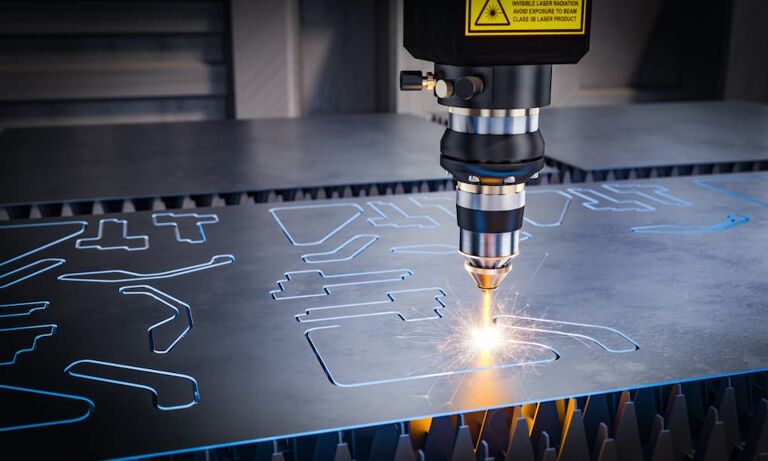
The manufacturing world is undergoing a massive shift—one driven not by slow, incremental improvements, but by a radical leap in machining speed and precision. Ultra-fast CNC systems, equipped with cutting-edge spindles, smart controllers, and real-time feedback sensors, are redefining what’s possible on the factory floor. What once took hours can now be achieved in minutes, and the impact spans every major industry from aerospace to automotive to consumer electronics.
This article explores how ultra-fast CNC systems are transforming modern manufacturing, why they matter, and how businesses can harness these advancements for competitive advantage.
1. The Rise of Ultra-Fast CNC Machining
Traditional CNC machines already represented a major improvement over manual machining, but the newest generation of ultra-fast CNC systems operates on an entirely different level. With spindle speeds now exceeding 50,000–100,000 RPM, motion control accuracy measured in microns, and optimized tool paths generated by AI-powered software, manufacturers are hitting production capacities that were unimaginable just a decade ago.
Key Upgrades Driving Ultra-Fast CNC Technology
-
High-speed spindle motors with superior thermal control
-
Advanced servo drives for ultra-smooth movement
-
Multi-axis synchronization for complex geometries
-
AI-enhanced CAM algorithms for optimized cutting paths
-
Smart cooling systems enabling aggressive machining without overheating
These enhancements combine to deliver precision at speeds no conventional machinery can match.
2. Speed Without Sacrificing Precision
One of the biggest misconceptions is that higher machining speed automatically reduces accuracy. In reality, ultra-fast CNC systems improve precision through:
-
Real-time vibration monitoring
-
Dynamic path correction
-
Adaptive feed rate control
-
Temperature-compensated movement
This means operators can machine intricate parts at high speed while maintaining tight tolerances.
Industries That Demand Extreme Precision
-
Medical implants
-
Jet engine components
-
Robotics end-effectors
-
Optical housings
-
Micro-electronics
Every cut, contour, and surface finish is consistent—even at maximum machining speed.
3. Revolutionizing Production Cycles and Throughput
Perhaps the most transformative impact of ultra-fast CNC systems is their ability to drastically reduce cycle time. Jobs that previously required multiple setups and long machining hours can now be completed in a fraction of the time.
Typical Efficiency Gains
-
50–70% reduction in machining time
-
Faster prototyping and product development
-
Higher repeatability for large production runs
-
Reduced downtime through predictive maintenance
In competitive industries, shaving even a few minutes off a cycle can translate into millions in long-term savings—making ultra-fast CNC machines a strategic investment.
4. Ultra-Fast CNC in High-Volume Production Lines
Mass production relies on consistency, and ultra-fast CNC systems outperform traditional units by delivering identical parts with near-zero deviation. When integrated into automated production lines—complete with robotic loaders, conveyors, and in-line quality scanners—these machines enable lights-out manufacturing.
Benefits for High-Volume Industries
-
Automotive: faster engine component machining
-
Aerospace: quicker milling of complex titanium parts
-
Electronics: micro-precision casings and housings
-
Tooling: rapid mold and die manufacturing
The combination of speed and accuracy elevates industrial workflows and dramatically increases output capability.
5. Smarter CAM Software Behind the Speed
The brains behind ultra-fast CNC machining is the software. Modern CAM systems use:
-
AI-generated toolpaths
-
Machine learning for feed/speed optimization
-
Real-time error prediction
-
Automatic collision avoidance
This eliminates guesswork and manual trial-and-error. Even complex 5-axis operations can be programmed in minutes instead of hours.
Why This Matters for Manufacturers
-
Faster programming for urgent jobs
-
Better material utilization
-
Reduced tool breakage
-
Increased operator confidence
The result: more productive teams and fewer costly mistakes.
6. Enhanced Tooling for High-Speed Cutting
It’s not just the machines that have improved—tooling has advanced significantly to keep pace with ultra-fast machining.
Modern Tooling Innovations Include
-
Nano-coated carbide cutting tools
-
Polycrystalline diamond (PCD) tools
-
Heat-resistant superalloy cutters
-
Chipbreaker geometries optimized for high RPM
These tools maintain sharpness longer, resist extreme heat, and maintain consistent performance at high speed.
7. Improved Material Compatibility at High Speed
Ultra-fast CNC systems excel at cutting both conventional and advanced materials:
-
Aluminum and magnesium alloys
-
Hardened steel
-
Titanium
-
Inconel
-
Copper and brass
-
Plastics and composites
High-speed spindles combined with optimized tool design allow manufacturers to process materials once considered too slow or too expensive to machine at scale.
8. Automation + Ultra-Fast CNC = The New Industry Standard
Automation plays a critical role in maximizing the advantages of ultra-fast CNC machining. When paired with industrial robotics, smart conveyors, and automated quality inspection, ultra-fast CNC systems deliver unparalleled efficiency.
The Future Looks Like This
-
Fully automated machine cells
-
Minimal human intervention
-
Around-the-clock production
-
Real-time quality monitoring
-
Zero-defect machining
Manufacturers adopting automation early will dominate their markets for years to come.
9. Cost Efficiency Through Speed and Predictability
While ultra-fast CNC systems may require higher initial investment, the long-term cost savings are substantial:
-
Lower labor costs
-
Faster ROI on production runs
-
Reduced scrap and wasted material
-
Lower energy consumption per part
-
Shorter lead times for customers
For many manufacturers, these benefits create a decisive competitive edge.
Conclusion: Ultra-Fast CNC Is the New Benchmark in Modern Manufacturing
Ultra-fast CNC systems aren’t just an upgrade—they represent a complete transformation in the way industries operate. By delivering unmatched speed, precision, and automation compatibility, they enable manufacturers to produce more, waste less, and respond faster to market demands.
As industries continue pushing for efficiency and innovation, ultra-fast CNC machining will stand at the center of modern manufacturing’s future.