
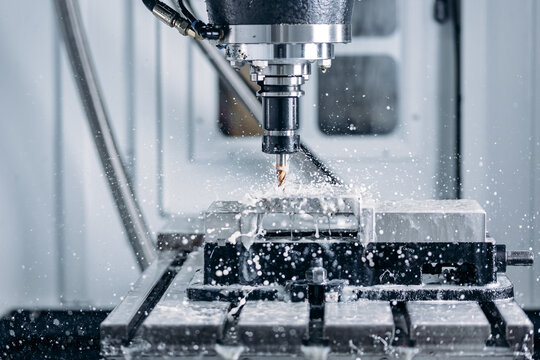
In the last decade, CNC machining has moved far beyond its traditional role as a simple subtractive manufacturing tool. Today, CNC innovation sits at the heart of global industrial production, powering everything from aerospace and medical devices to automotive engineering, robotics, and advanced consumer products. But what many manufacturers and businesses still don’t realize is just how dramatically CNC technology has evolved—quietly revolutionizing what’s possible in precision engineering.
This article uncovers the newest CNC breakthroughs you may not have seen yet, and how they are shaping the next generation of high-performance manufacturing.
1. Ultra-High-Speed CNC Systems: Faster Than Ever Before
Modern CNC machines now operate at speeds that were once considered impossible. With spindle speeds exceeding 60,000 RPM, manufacturers can achieve micro-level detail with flawless surface finishes. These ultra-high-speed CNC systems drastically reduce cycle time, increase output, and improve consistency.
Why It Matters
-
Faster prototyping
-
Increased part throughput
-
Reduced tool wear due to optimized cutting geometry
-
Lower production costs
Industries like aerospace and medical manufacturing benefit the most, where micro-precision and speed directly influence project success.
2. AI-Enhanced CNC Programming: Smarter Machining With Zero Guesswork
Artificial intelligence and machine-learning algorithms are transforming CNC programming. Instead of manually calculating tool paths, AI-driven CAM software now predicts optimal cutting strategies, adjusts feeds and speeds automatically, and even identifies collision risks before machining begins.
Key Advantages
-
Automatic toolpath optimization
-
Reduced waste and scrap
-
Perfect repeatability for complex geometries
-
Faster onboarding for new operators
AI is making CNC machining more reliable, more intuitive, and more accessible than ever before.
3. Hybrid CNC Machines: Milling, Printing, and Laser Processing in One Platform
One of the most exciting innovations is the rise of hybrid CNC machines—equipment that combines multiple manufacturing processes into a single seamless workflow. These machines can:
-
Mill raw stock material
-
Laser cut fine features
-
3D print metal or polymer layers
-
Perform surface finishing
This fusion of additive and subtractive manufacturing gives engineers the ability to create shapes that were impossible just a few years ago.
Industries Using Hybrid CNC Systems
-
Defense
-
Rocket and satellite manufacturing
-
Medical implant production
-
High-precision tooling
Hybrid workflows deliver faster prototyping, lighter components, and unmatched design freedom.
4. Digital Twin Technology: Simulate Before You Cut
Digital twins are virtual replicas of CNC machines and machining processes. Before a single tool touches material, manufacturers can simulate the entire operation in a risk-free environment.
What Digital Twins Offer
-
Predictive maintenance
-
Virtual testing for new part designs
-
Real-time error detection
-
Significant reduction in setup time
By eliminating trial and error, digital twin CNC systems increase both productivity and confidence in high-stakes manufacturing.
5. Self-Correcting CNC Systems With Real-Time Feedback Sensors
The newest CNC machines feature embedded smart sensors that collect real-time data during machining. These sensors measure:
-
Tool vibration
-
Heat generation
-
Cutting force
-
Axis deviation
-
Spindle load
Using this live feedback, CNC machines automatically correct tool paths, adjust speed, or change cutting depth to maintain perfect accuracy.
The Outcome
-
Zero-defect manufacturing
-
Extended machine lifespan
-
Reduced downtime
-
Unmatched dimensional accuracy
This innovation is pushing CNC technology closer to fully autonomous machining.
6. Next-Level Material Compatibility: From Titanium to Carbon Composites
As industries evolve, so do material requirements. New CNC machines now handle an expanded range of advanced materials:
-
Titanium alloys
-
Carbon fiber composites
-
Hardened steels
-
Inconel and aerospace-grade metals
-
Ceramic substrates
Cutting-edge tool coatings and multi-axis machining allow manufacturers to create intricate parts previously considered too difficult or expensive.
7. Multi-Axis Mastery: The Rise of Affordable 5-Axis CNC
Five-axis machining has existed for years—but recently, its cost has dropped significantly. More manufacturers than ever can now access true 5-axis benefits like:
-
Machining complex curves in a single setup
-
Reduced fixturing and repositioning
-
Higher precision for 3D shapes
-
Tighter tolerances for aerospace and automotive parts
This democratization of advanced machining is accelerating innovation worldwide.
8. CNC Automation and Lights-Out Manufacturing
Fully automated CNC lines powered by robotic loaders, smart conveyors, and self-scheduling software allow manufacturers to run production 24/7 without human supervision.
Automation Delivers
-
Perfect repeatability
-
Massive productivity gains
-
Lower labor costs
-
Consistent part quality
“Lights-out machining” is becoming the new standard for high-volume industrial production.
9. Sustainable CNC Practices: Less Waste, More Efficiency
Modern CNC innovations also focus on sustainability. New systems use:
-
Coolant recycling
-
Energy-efficient spindles
-
Chip optimization and reclaiming
-
Eco-friendly lubrication systems
Precision engineering is becoming greener without sacrificing performance.
Conclusion: The Future of CNC Precision Engineering Is Already Here
CNC machines are no longer simple fabrication tools—they are intelligent, automated, self-correcting manufacturing platforms capable of producing parts with near-perfect accuracy. From AI-driven programming and hybrid machining to real-time data feedback and automation, the CNC innovations emerging today are reshaping the future of global industry.
Whether you are a machinist, manufacturer, engineer, or business owner, understanding these breakthroughs will help you stay ahead in a rapidly evolving market.